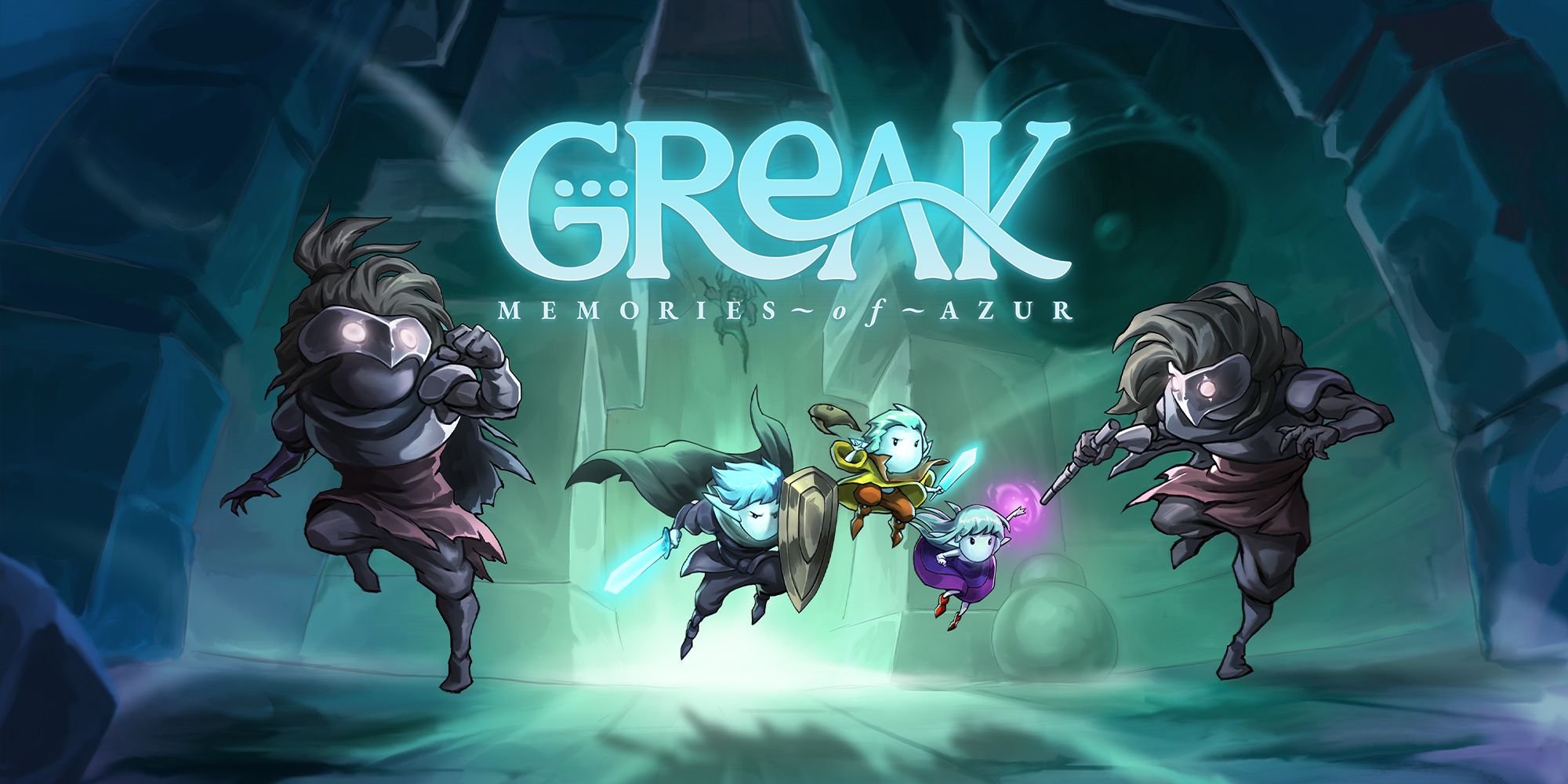
Greak: Memories of Azur is the ambitious debut title for Mexico-based studio Navegante Entertainment. It tells the story of siblings Greak, Adara, and Raydel as they fight to reunite with one another and find a way to escape their homeland of Azur, which has been decimated by the Urlags and the plague that followed them. Due to its unique twist on the Metroidvania genre, nuanced and satisfying gameplay, and its art and animation, Greak carves out its own identity while also standing alongside highly revered titles like Hollow Knight.
The world of Greak is beautifully designed and animated. Its art style is reminiscent of games like Ori and the Will of the Wisps and Hollow Knight, but like those two, Greak can maintain its own distinct visual identity. There are several moments where Greak will pause from action in order to let the camera zoom out and show the beautiful vistas in a way that emphasizes the Azur that the siblings will remember.
Greak offers a fresh take on one of the core mechanics of Metroidvanias, choosing to replace ability upgrades and new items with three characters with unique skillsets that are controlled either as a unit or as individual characters. Greak is the swift and agile younger brother who can crawl through narrow spaces, roll to dodge, and wields a short sword and crossbow. Adara is the middle sister who can levitate for a short time, dive under water, and uses magic to attack at any distance. Raydel is the elder brother who wields a long sword and shield and utilizes a hookshot for platforming.
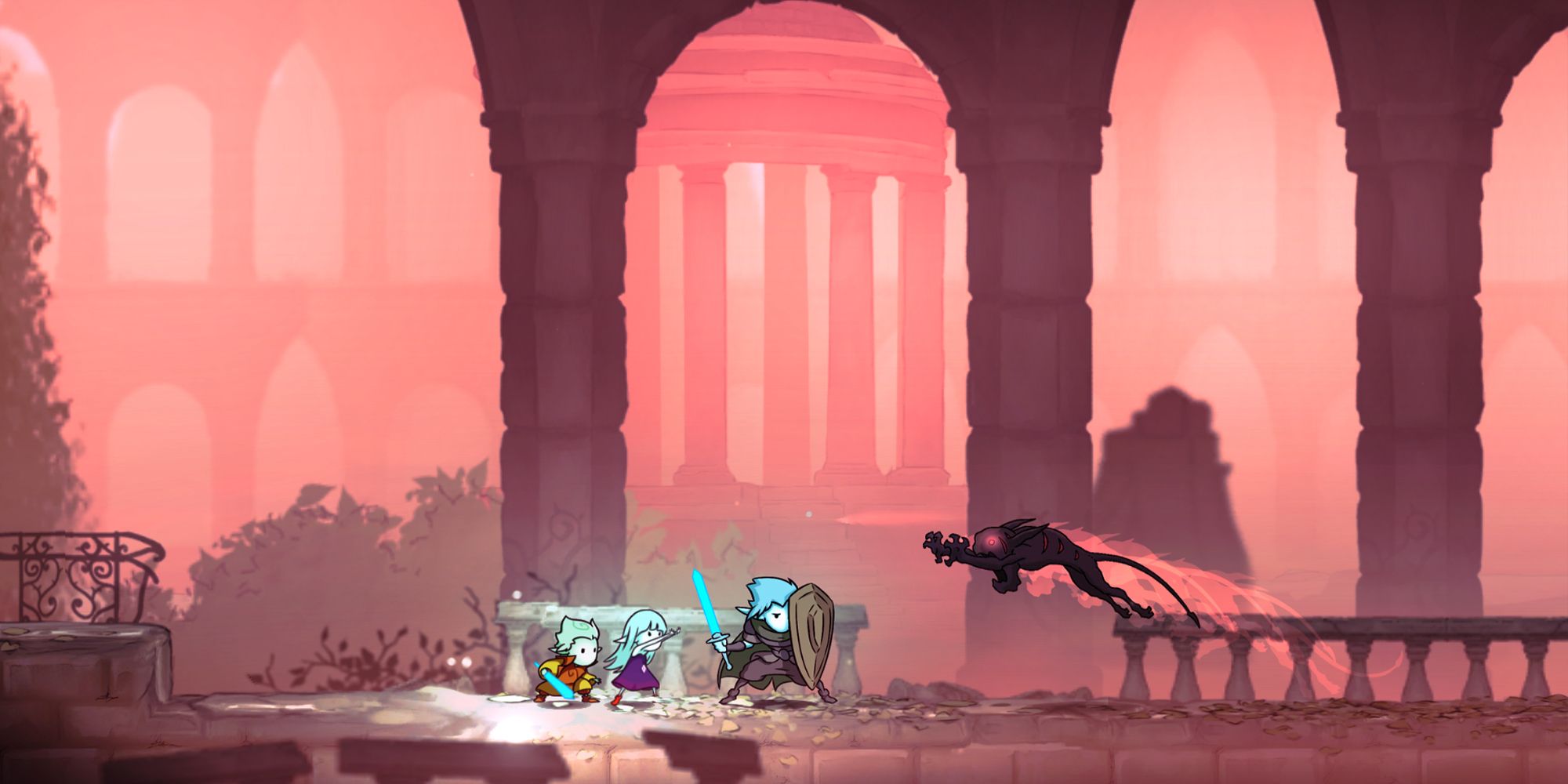
The world of Greak is perfectly designed to use this mechanic as it offers multiple approaches to problems and puzzles while making players engage with each sibling evenly. This approach not only creates a solid gameplay loop, but it also allows players to quickly become invested in each sibling and learn their nuances. Controlling the siblings as a single unit can get tricky however, as it’s easy to get lost during combat and if one sibling dies, the level will restart from the last checkpoint.
Aside from the learning curve of controlling three characters at once, the action and platforming feel solid. The combat is once again very similar to Hollow Knight, with attacks that feel swift and impactful, the main weak point being Adara’s magic attacks when controlling her solo. When attacking as a unit, enemies and bosses can be quickly cut down so long as the player keeps the trio from getting separated. Platforming is equally as satisfying, with swinging around on Raydel’s hookshot easily being the most satisfying way to move.
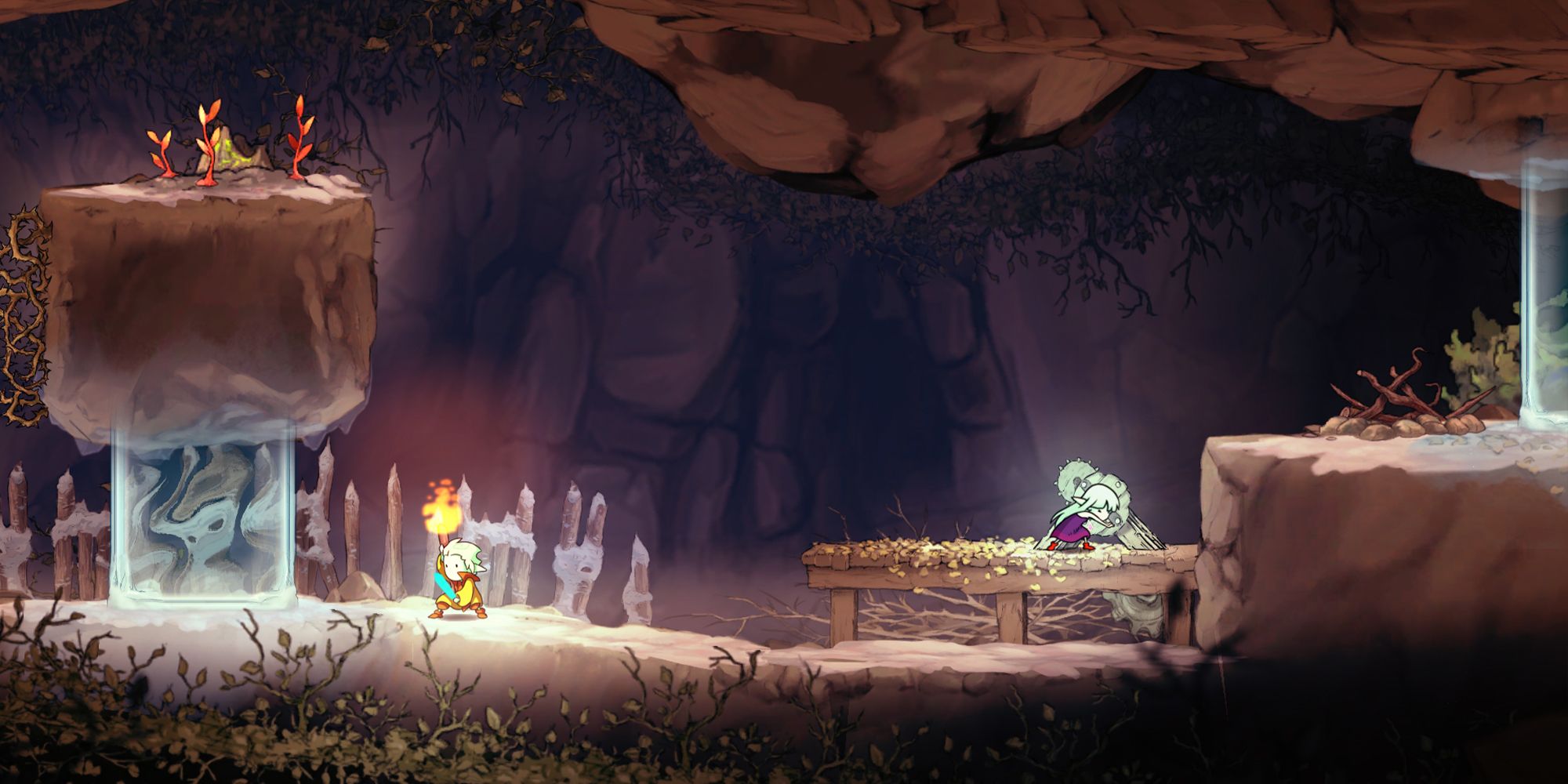
Most of Greak’s first half is dungeon navigation with very light puzzle solving due to only having the skillset of one or two characters. As it progresses, the puzzles become slightly more intricate and involved until all three siblings are reunited and approach the final area. The final dungeon is one huge labyrinth that requires each character to navigate four sections until finally reaching the middle, only to then quickly escape it. This final level not only tests how well the player has internalized the game, but it also just leaves players feeling smart and satisfied.
Greak is yet another great Metroidvania that manages to make the genre feel fresh and empowering. While the world of this story is dark, the feeling players are left with is one of joy, and its well-paced runtime leaves room for both a sequel and replay value. Ultimately, the most disappointing part of Greak: Memories of Azur is that it ended at all, and it's a must-play for anyone who finds the genre intriguing.
Greak: Memories of Azur releases August 17, 2021 for PlayStation 5, Xbox Series X|S, Nintendo Switch, and Steam. Screen Rant was provided with a PS5 download code for the purpose of this review

No comments:
Post a Comment