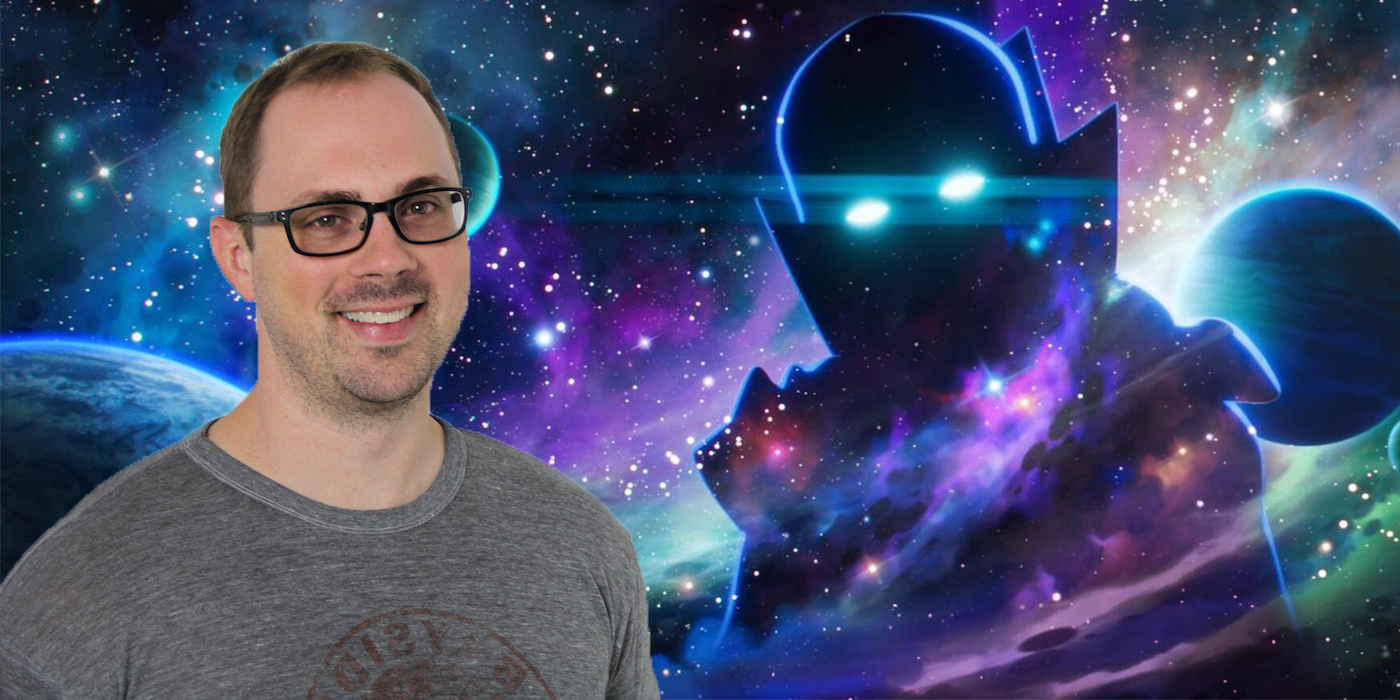
Marvel's What If...? is bringing something brand-new to the MCU, both in storytelling and in the visual medium. It's Marvel Studios' first animated series for Disney+, and it runs with the Phase 4 concept of the multiverse, with each episode putting a new twist on beloved characters' familiar stories. For some longtime Marvel veterans, like Head of Visual Development & Character Design Ryan Meinerding, it can be fun to revisit old stories and make them something brand-new or to imagine what one character might look like as another.
Screen Rant sat down with Meinerding to talk about his long career with Marvel, the challenges of running each live-action character through a Leyendecker filter, the fun of tackling different branches of the MCU, and more.
You've done so much with Marvel, but it's all been live-action. Was it challenging making the jump to animation? Because you're still doing the concept art, the visual development and general look, but I imagine that you have to approach it in a different way with animation.
Ryan Meinerding: Yeah, it was a big challenge but it was a lot of fun. I actually moved out to California to get into animation and sort of found myself going towards the live-action route without really making the decision to.
When they were talking about doing the series, the idea that I was going to get to work on characters that I had previously worked on for the past 15 years, and it was going to be animated, and we were going to do a style based on J. C. Leyendecker - there were just too many things. I was actually probably too excited and giddy when I was trying to say, "How involved can I be?" because I really wanted to be as involved as I could be.
A lot of my time at Marvel has been spent creating art and doing design and solving problems. So ,in a lot of ways, there's a lot of similarities. Obviously, it's a different style and it's a different tone; we're trying to achieve different things. But we're still trying to solve story problems, we're trying to figure out the tone through the style, we are trying to twist and turn some of the characters that we've worked on for quite a long time. It's different in that I'm doing a lot more drawing and painting, and I'm actually drawing on paper and use pencils and stuff instead of just being in Photoshop all the time.
But for the most part, I was very fortunate to have been part of this team, and I'm really happy with the way everything's turned out.
Some of the characters look pretty much spot on to what they look like in the Marvel Cinematic Universe, where other characters are pretty noticeably different. Was that by necessity, just because it's hard to animate certain people, or was there a reason behind that?
Ryan Meinerding: I think a lot of the characters from the MCU, we were trying to represent through that filter of J. C. Leyendecker, and I think the notion of passing each character through that filter ended up in slightly different places.
I guess the way that I would look at it is: the MCU timeline being that main universe timeline that's represented in the films and streaming shows, the idea of starting there and then having that really definitive break-off point for What If...? Like, "What if Dr. Strange lost his heart instead of his hands?" really means that we're moving forward from two very distinct points.
And a lot of times, what we're trying to execute is much different than what actually was in the MCU. Some of those designs end up going in directions where we're trying to execute things that are so different that it ends up affecting and altering the look of the characters. And running that through that Leyendecker filter also adds a component of stylization and flattening, so we ended up where we do with each character.
A lot of times in live-action, the concept or the costumes have to be simplified a little bit from what the concept art shows, but you can do exactly what you can see in animation. Did you find it was a lot of fun, knowing that what you were conceiving is pretty much what can end up on screen?
Ryan Meinerding: Yeah, it's interesting, because I feel like my experience at Marvel Studios is that I've never felt limited here. The stuff that we do for the films always feels like it's coming from the point of, "What's the best solution? What's the best creative iteration of this character we can do that's going to work for the story and still b representative of the icon?"
In a lot of ways, this show feels like a lot of the same things for me. We're still trying to look at that main 'verse and that main timeline. If we're doing the What If...? variation off of it, we're looking at these two points and saying, "How are they similar? How are they different?" And then we're doing 15 or sometimes 20 different versions to show the director and say, "Which one seems to work for this story?" I would say, in general, the process isn't that different.
But I think you are right, and that the guardrails are sort of taken off, because I think that the whole reason to do this show was to have fun and do something completely different. So, if somebody comes and says, "What if there's an evil Doctor Strange?" He could go evil in like 150 million ways. You end up creating that branch timeline, or the multiverse component allows you to go in so many different directions with just the visual, without even telling the story yet.
So, I guess I would say: yes, there are all kinds of different, unique places to go. But I would never say that anything we've ever done felt limited. It always felt like we were trying to find the right decision, and that's still the case. But maybe the right decision might require a little bit more exploration on What If, because there are so many possibilities.
You guys make some bold narrative decisions. Was there ever a moment where you were worried about how fans would react, or were you just excited to shake things up and lob a narrative bomb into the middle of things?
Ryan Meinerding: I think, for me, this show is so compelling because it does bounce off the main timeline that people love in hopefully compelling ways. If you're seeing a character like Thanos, that feels much different than he did in the films he was in - I'd like to think of it as just reinforcing whatever icon people really responded to in the first place.
Seeing that variation, to me, is not meant to replace the Thanos that we've seen. It's just meant to give you a different understanding of his character. And I think that's one of the most fun parts of this show; seeing characters that went down a certain path in their own timeline. The notion that in this timeline, they took a different path.
And I don't think of it as lobbing a grenade. I think of it as more just holding up a reflection to these characters that people love, so they can see them in a slightly different light. And I'd like to think that it makes them love them a little bit more.
Do you ever have moments where you look back at everything that Marvel has accomplished? You've had a really influential hand in that for the past decade or so. What does it feel to look back and see this massive, sprawling universe that you've all managed to make work?
Ryan Meinerding: Yeah. I think from the first character I've worked on in this place, I've always just felt very fortunate to be in the position that I'm in. And I've never - if you were to talk to me back, I would have never seen the path that the company has gone down. I didn't see the career path for myself. I just was fortunate enough to try and deliver, and do the best work that I could along the way.
Looking back, all I can say is that I've been very fortunate to be on incredible teams with incredible people with the ability to deliver on the projects that came to us. And along the way, being able to hopefully work on these icons in a compelling way that makes all kinds of generations of people love them in the same way that I did when I was a kid.
I don't know. It's a big question. I appreciate it, and you said some very kind things. But for me, this place is so compelling because we're always trying to push what we can do. Maybe this is silly to admit, but I just feel like a lot of times I'm just hanging on for dear life because they're really trying to do so many things.
And this show is one of those examples, where every episode had something so creative that you're like, "I want to be a part of this. I've got to figure out that design." You just feel like you're you pushing yourself, and you're pushing what you can do. And I hope that comes through on the screen, that we're really doing the best to tell the best stories with the best visuals that we can.
Marvel's What If...? releases new episodes Wednesdays on Disney+.

No comments:
Post a Comment