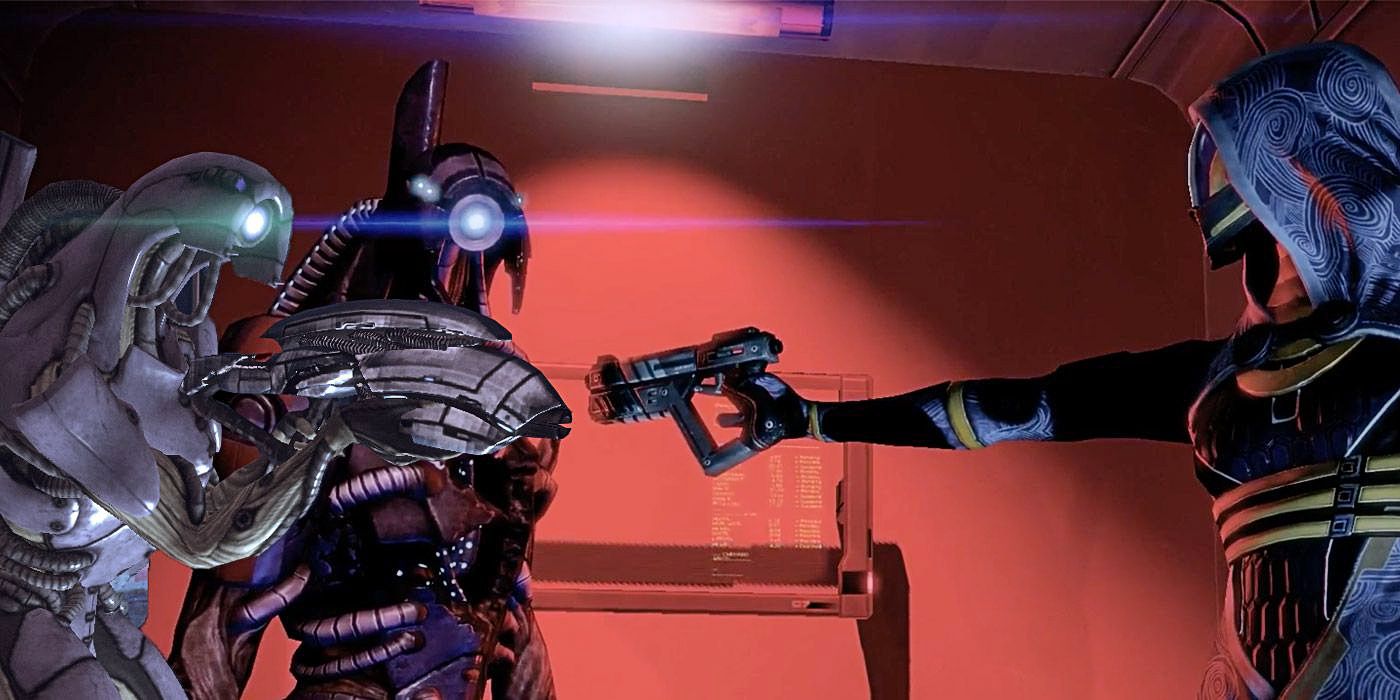
There are plenty of action-packed set pieces involved in saving Mass Effect's Milky Way from the Reaper invasion, but just as important to the game series are the countless hours spent in discussion with a wide variety of side characters. From the moment players take control of Commander Shepard in the first Mass Effect, they are engaged in discussions pertinent to the fate of interstellar civilization. This isn't a novel concept to games developed by BioWare, since the studio has a historical reputation for delivering dialog-heavy RPGs, but Mass Effect's conversations were unique in the way they defied a previously established BioWare presentation style.
One of the largest selling points of the original Mass Effect trilogy is the persistence of player choice across the three games. From eradicating a species once thought extinct, to punching a reporter in the face, Mass Effect lets players decide how Commander Shepard goes about their duties as a Specter. These choices, which almost uniformly come during a conversation, typically bring consequences both good and bad. The conversations themselves become a routine part of Mass Effect's gameplay, and this is largely accomplished by a subtle framing trick that was unorthodox to how BioWare typically produced its games.
Back in 2017, for the first game's 10th anniversary, video game animator Jonathan Cooper shared some interesting trivia related to Mass Effect's original development. One of the revelations divulged by Cooper was the fact that Mass Effect didn't have black bars on the top and bottom of the screen during dialog sequences, which was a stylistic staple of earlier BioWare RPGs. According to Cooper, there was a heated conversation with others involved in the development, with the animators eventually getting their way - having the black bars removed for interactive conversations in Mass Effect.
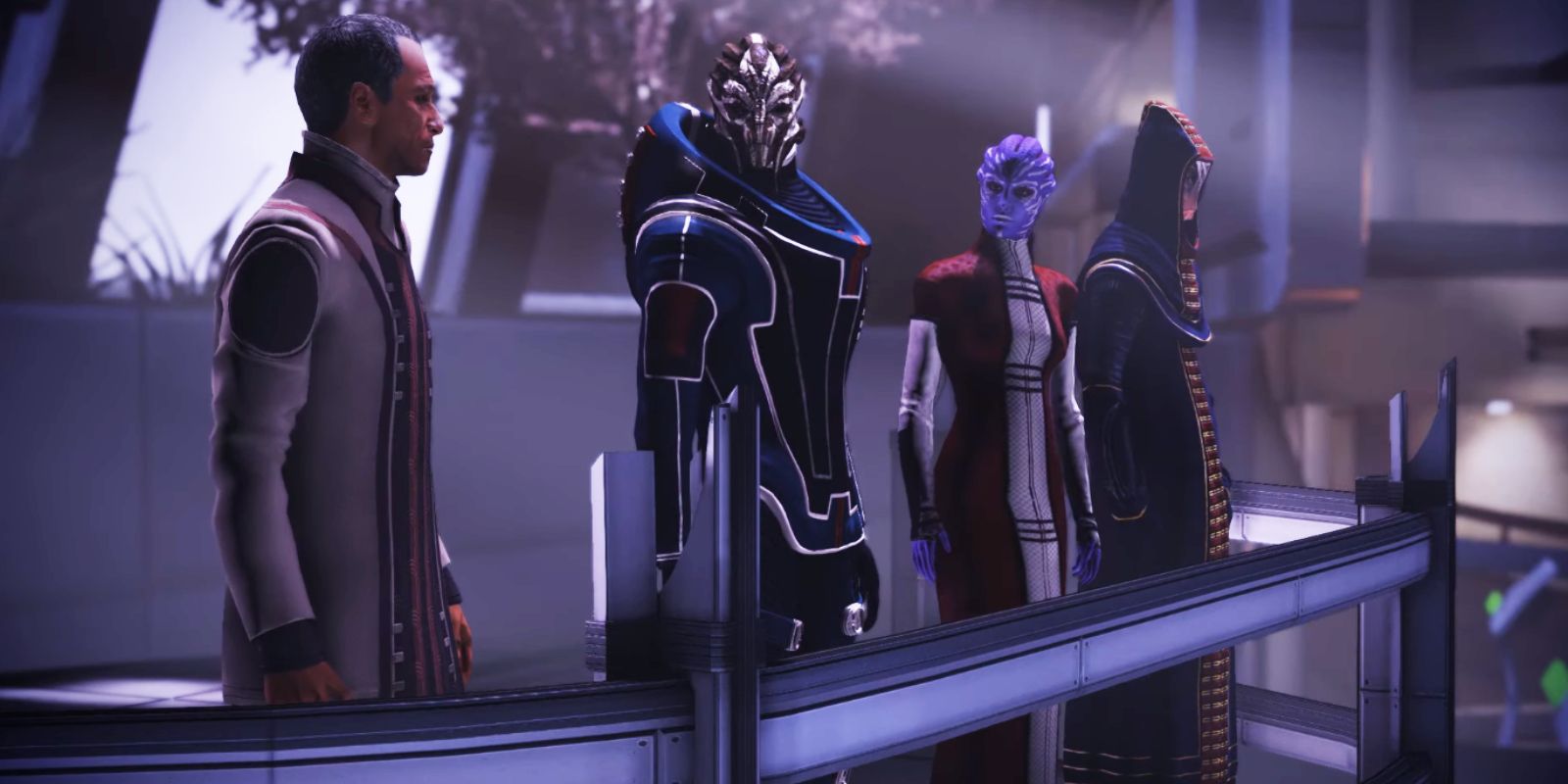
Cooper claims the reasoning behind abandoning the cinematic framing for dialog sequences was to "blur the lines between interactive dialogue and cutscenes." Any player even moderately engaged in the game will be able to tell the difference between a conversation and a more traditional cutscene, but the stylistic change from previous BioWare games actually does accomplish its goal. There's no reason to put the bars on the screen; the player has already chosen to talk to an NPC, and the dialog tree will make it unambiguous. The uniformity of the games without the bars means every minute of the experience is presented as equally important, which tracks with Mass Effect's emphasis on conversation.
By the time players finish the entire trilogy, potentially dozens of hours might have been spent in conversation. The intricacies of interstellar politics, the minutiae of interpersonal relationships, and the key historical aspects of even the most obscure alien races in Mass Effect are learned through interactive dialog. The hundreds of conversations that Commander Shepard engages in are perhaps the most important gameplay feature of the Mass Effect games. Removing stylistic separators like the black bars on the top and bottom of the screen helps the conversations become indistinguishable from the rest of the game and its cutscenes, thus giving them an important cinematic quality.
Source: Jonathan Cooper/Twitter

No comments:
Post a Comment