These Twilight vampires are growing up!


These Twilight vampires are growing up!

HBO's Game of Thrones is known for its extensive cast list, but only 12 characters appeared in every season. Based on George R. R. Martin's A Song of Ice and Fire novels, the fantasy show debuted in April 2011, running eight seasons before coming to an end in May 2019. The series, created by David Benioff and D. B. Weiss, consisted of 73 total episodes. Oddly enough, none of the actors in Game of Thrones appeared in more than 67 episodes, but there were plenty whose arcs were prevalent in all eight installments.
To follow the foundation put in place by Martin's epic tale, Game of Thrones featured a large ensemble cast. With a pivotal war taking place in the fictional nation of Westeros, an array of noble families were swept up into the conflict surrounding the claim for the Iron Throne. Besides the dozens upon dozens of notable side characters and guest stars, the series had an impressive list of primary figures. Among the actors in the front and center for much of the show included Kit Harington, Emilia Clarke, Peter Dinklage, Nikolaj Coster-Waldau, and Lena Headey. Those names, however, only scratch the surface when it came to the Game of Thrones' cast list.
Based on the amount of characters introduced in Game of Thrones, some viewers would expect the number of series regulars to be much higher. Figures like Bran Stark, Davos Seaworth, and Brienne of Tarth were integral to the plot, but that trio didn't appear every season. That said, here's every character who did have a role in all eight seasons.

Jon Snow appeared in a total of 62 episodes across the eight seasons of Game of Thrones. Originally presented as Ned Stark's bastard son, Jon eventually learned he was the son of Lyanna Stark and Rhaegar Targaryen. After becoming the Lord Commander of the Night's Watch, Jon turned his sights to restoring House Stark's control of the North while preventing an impending war against the White Walkers. Despite Jon's romantic involvement and loyalty to Daenerys Targaryen, he had no choice but to kill her before taking the Iron Throne in season 8. Harington survived the events of the series as he rejoined the Night's Watch when he was sent into exile.
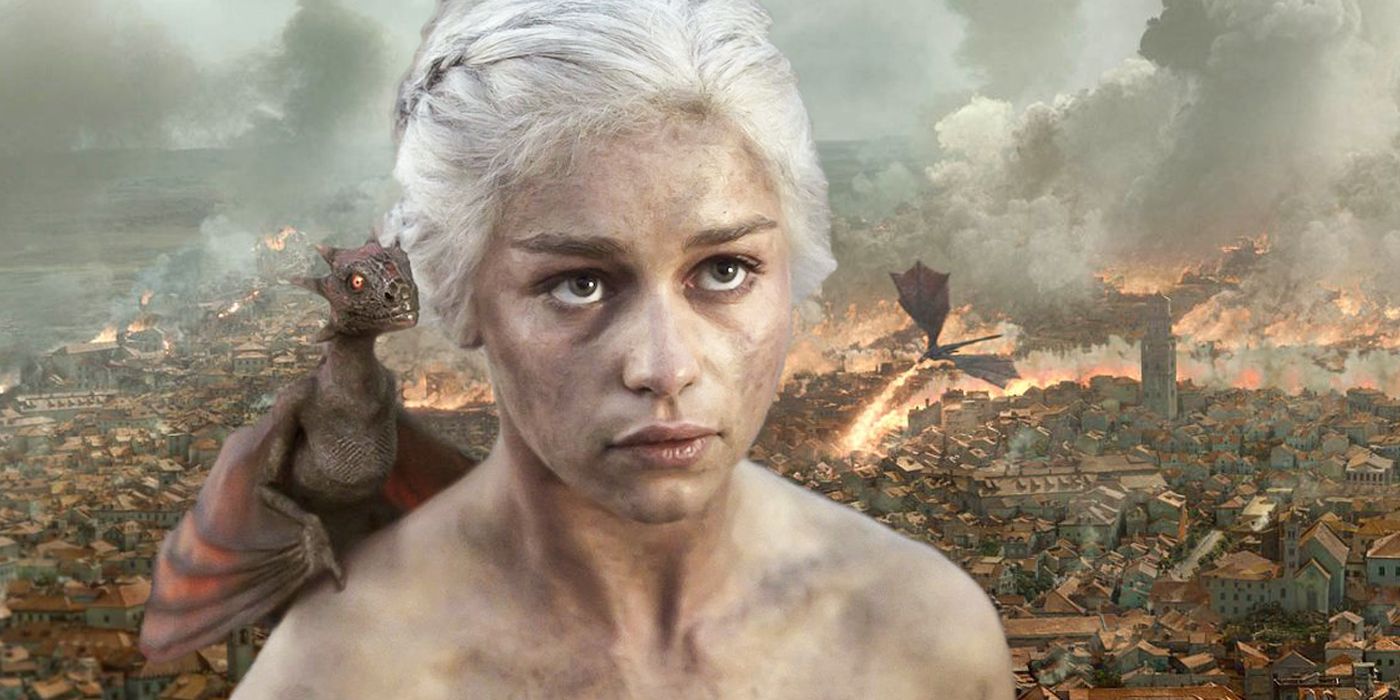
Daenerys Targaryen coincidentally starred in the same number of episodes as her eventual lover/murderer, Jon Snow. As one of the lead female figures, Daenerys started as the Princess of Dragonstone before becoming the Mother of Dragons and a Queen in the eyes of her followers. Her rise in power started after she married Khal Drogo, but her three dragons greatly helped her conquer several key locations. Upon aligning with Jon to thwart a takeover by the Night King, Daenerys focused on the Iron Throne. Though she briefly became the ruler of the Seven Kingdoms, her death in the series finale occurred before she was could officially sit atop the throne.

Out of all the characters featured in Game of Thrones, Tyrion Lannister appeared in the most episodes, totaling 67 out of the 73. The youngest child of Lord Tywin Lannister was always at odds with his family, which continued through adulthood. Despite serving his noble house, including his sadistic nephew, Joffrey Baratheon, Tyrion eventually switched allegiances to assist Daenerys' endeavors. By the end of the series, Tyrion was the last surviving Lannister when he was named the new Lord of Casterly Rock and Hand of the King.

Cersei Lannister was another character to be present for 62 total episodes of the epic fantasy series. Though Cersei was presented as one of the show's biggest villains, the figure suffered a lot of trauma on a personal level. She eventually became the Queen of the Seven Kingdoms, but it came after the deaths of all of her children. Cersei's secretive incestuous relationship with her twin brother, Jaime, never allowed her to live a fulfilling life. While the secrets caught up with her, her future was already in jeopardy by being the enemy of Daenerys. Cersei starred in season 8, but she didn't make it to the series finale due to her death caused by Daenerys attack on King's Landing.

Like his siblings, Jaime Lannister starred in all eight seasons of Game of Thrones, coming in at 55 episodes. The "Kingslayer" wasn't sadistic like his twin sister/lover, but he was also loyal to House Lannister despite the trouble they caused throughout Westeros. Interestingly, Jaime helped House Stark on several occasions, including the Battle of Winterfell. In the show's final season, Jaime attempted to return to Cersei as Daenerys looked to dethrone the queen. Jaime and Cersei were killed after being buried in the rubble of the destruction caused by Daenerys' rage-fueled attack on the city.
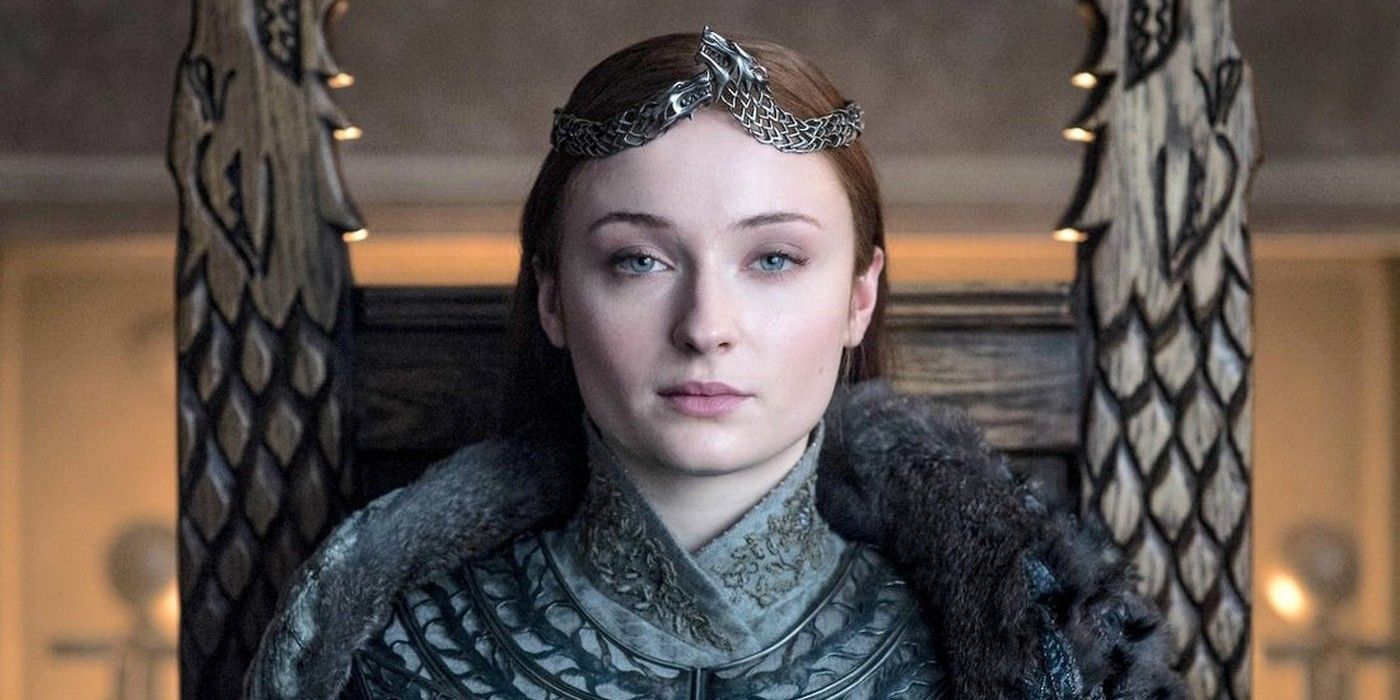
Ned and Catelyn Stark's eldest daughter had arguably the most compelling arc throughout Game of Thrones' run. Sansa Stark started as a naive idealist who would have sold her soul to become a noblewoman. After being manipulated by House Lannister as more family members were killed, Sansa began acknowledging the truth. The young woman survived several brutal experiences, but she admirably used her hardships as motivation to keep moving forward. Shortly after returning to Winterfell and fighting for her home, Sansa was named the Queen of the North.

Though her path couldn't have been more different than Sansa's, Arya Stark also appeared in 59 episodes through Game of Thrones' eight seasons. Unlike her sister, Arya had a tomboy demeanor, which helped her escape the grasp of House Lannister. During her tumultuous journey, Arya acquired key allies before training as a Faceless Man. She eventually reunited with some of her family in Winterfell after checking off a few names on her kill list. Arya surprisingly served as the figure who killed the Night King. Following the assassination of Westeros, Arya decided to set off on a sailing trip, bringing an end to her arc in the series finale.

Theon Greyjoy was one of the more complicated characters in Game of Thrones based on his unpredictable loyalties throughout the eight seasons. Originally aligned with Robb Stark, Theon betrayed the family to support his father's invasion of the North. Following his time as a hostage of Ramsay Bolton, Theon attempted to redeem himself by saving Sansa from House Bolton. He also tried to make amends with his sister, Yara, before assisting in the Battle of Winterfell, where he died protecting Bran from the Night King.

As Jon's closest friend, Samwell Tarly appeared in every season of the series. He originally debuted as a recruit of the Night's Watch before embarking on the order's most dangerous missions. Though he often stood by Jon's side, Sam acquired his own noteworthy achievements, including starting a family with Gilly and gaining the required experience to become a Grand Maester by series end.

Jorah Mormont might not have been a central figure in Game of Thrones, but the character appeared every season. In his 52 total episodes, Jorah primarily served Daenerys. Saving his leader on several occasions, Jorah had abandoned his role for a brief time when he was infected with greyscale. The man was able to reunite with Daenerys' force ahead of the Battle of Winterfell, which became the site of Jorah's tragic death.

Bronn appeared in a handful of episodes in every season of Game of Thrones. First presented as a sellsword, Bronn emerged as the personal bodyguard to Tyrion before gaining more work in King's Landing. Despite having ties to House Lannister, Bronn was more of a wildcard. Due to his arrangement with Tyrion, Bronn was made the Lord of Highgarden and Master of Coin when Bran was named the new ruler of the Seven Kingdoms.

Despite not being physically active in the War of the Five Kings, Varys was a key member of the conflict based on his intel. While serving as the Master of Whispers on the Baratheon small council, Varys eventually fled from King's Landing, seeing as he was active in the cause against House Lannister. He remained a key supporter of Daenerys, serving her until the attack on King's Landing. Due to his worries regarding Daenerys' sanity, Varys was executed for treason in Game of Thrones' final season.
Green Lantern never appeared in Zack Snyder's version of the DC Extended Universe, but his films already set up the introduction of Hal Jordan. Snyder's first DC movie, Man of Steel, arrived in 2013 and was layered with Easter eggs for a wider DC universe. This includes references to Bruce Wayne and Lex Luthor through Wayne Enterprises and LexCorp logos. In these cases, Snyder was able to pay off the teases with both characters joining the DCEU in Batman v Superman: Dawn of Justice.
As the second film in his overall DC plan, Batman v Superman: Dawn of Justice is responsible for setting up the DCEU's future Snyder wanted. The movie featured the introduction of Wonder Woman, teased her solo movie, and included cameos by Aquaman, Cyborg, and Flash ahead of Justice League. These four plus Superman and Batman are the six members of the Justice League in Snyder's DCEU and will be the center of Zack Snyder's Justice League. But, it was widely expected that one of the Green Lanterns would join the story at some point.
Snyder never got far enough in the creation of the DCEU to cast Hal Jordan or John Stewart, but that didn't stop him from subtly setting up the introduction of a Green Lantern. The setup is particularly for Hal Jordan and the use of a supporting character from his comics. In both Man of Steel and Batman v Superman: Dawn of Justice, audiences got to see Captain Carrie Farris (Christina Wren). This name should register on some level with fans of Green Lantern's comics, as it is a clear nod to Caroline 'Carol' Ferris. She is the longtime love interest to Hal Jordan in the source material who is also an expert pilot.

Even with this Green Lantern connection in the comics, it is unclear if Farris would be tied to Hal Jordan if he ever debuted in Snyder's DCEU. Farris had a minor role in both of her film appearances and Snyder has proven time and time again he's not afraid to go against the source material. She might be an important part of Hal's story in the past, but Snyder might never have made that connection. After all, he killed Jimmy Olsen after only one scene. Although, Man of Steel showed she already has an interest in superheroes as she called Superman hot, so a romance with another intergalactic hero could be right up Farris' ally.
While Snyder hasn't revealed if Farris will appear in Zack Snyder's Justice League, the movie could include additional setup for Green Lantern. The history lesson sequence of Darkseid's first attempt to invade Earth is expected to include a Green Lantern character, just as it did in the theatrical cut. There is also speculation that Hal Jordan or another more recognizable member of the intergalactic force could appear by the film's finale. And with the DCEU movie's four-hour runtime, there is always the chance other Easter eggs will be included that reference Hal Jordan, the death of Abin Sur, and so on.

WandaVision episode 8 made Marvel Cinematic Universe history and improved Captain America: The Winter Soldier's post-credits scene in the process. Long before Elizabeth Olsen starred as Wanda Maximoff, aka Scarlet Witch in a Disney+ series, she made her MCU debut in one of the franchise's famous tag scenes. The post-credits scene in Captain America: The Winter Soldier showed Hydra's experiments with Loki's scepter, which brought the revelation of Wanda getting powers from the experiments.
Seven years later and after multiple film appearances, WandaVision is finally giving the MCU an outlet to explore more about Scarlet Witch. Her past became the focus of WandaVision episode 8 and gave viewers a first-hand look at events that had only been alluded to in the past. This included the night a Stark bomb killed her parents and being exposed to the Mind Stone. The latter proved to be quite revealing, as the Infinity Stone awoke Wanda's powers and showed her a vision of her future as the Scarlet Witch. In doing so, WandaVision cemented a place in MCU history by revisiting a post-credits scene.
The MCU has featured dozens of post-credits scenes over the years, but they are mostly self-contained or a joke - not counting the ones that are simply scenes pulled straight out of an upcoming movie. For years Captain America: The Winter Soldier's post-credits scene involving Wanda's origins would qualify as one of the scenes that were good to see but didn't provide any major information future movies left out. WandaVision changed this, though, by going back to the same time. The exploration of Scarlet Witch's past allowed WandaVision to build on the scene and retroactively improve it by showing fans what happened before Wanda is seen breaking boxes in a prison cell.

WandaVision revisiting the past enhances Captain America: The Winter Soldier's post-credits scene by giving fans more context for what happened during Scarlet Witch's origin. Viewers now understand exactly what happened during the Hydra experiments and the experience she had when interacting with the Mind Stone. Instead of her being forced into doing something or going through a painful experience, Wanda getting powers (or them being amplified) puts Captain America: The Winter Soldier's post-credits scene in a new light. This will change how fans view the scene in the future but for the better as a full understanding of Wanda's origin.
With one more episode to go in WandaVision, there's always the chance that more details about these experiments and the origins of Wanda's powers will come. The new look at her origin teased Wanda's transformation into the Scarlet Witch, but there were also hints that Wanda had powers long before the experiments. If the finale reveals she was born with magic powers or even as a mutant, then that will add another wrinkle to her story. So even though WandaVision is likely done expanding upon Captain America: The Winter Soldier's post-credits scene, there's still room for the show to add to Scarlet Witch's origin.
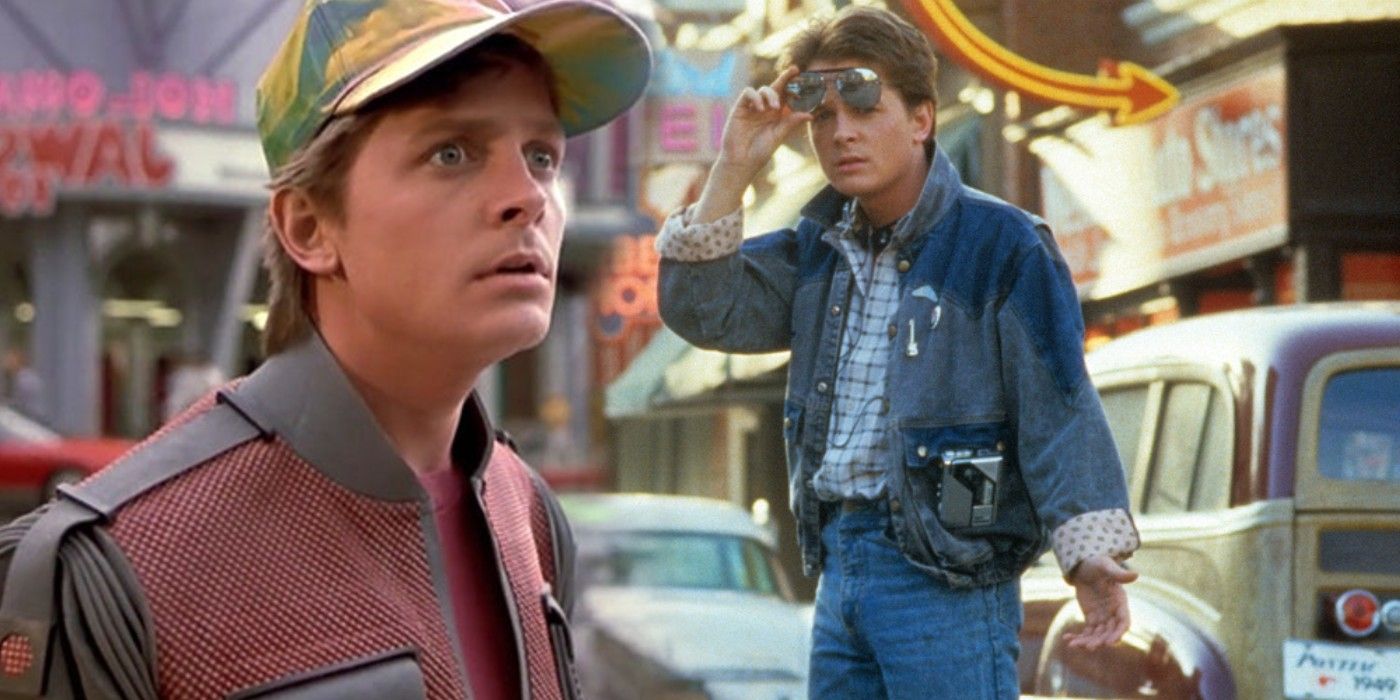
The Back to the Future franchise is no stranger to plot holes, and during Doc and Marty's exciting conclusion to the original 1985 film, a question arises regarding its time-travel logic. Of course, Back to the Future is not only one of the foundational time-travel films, but one of the most beloved movies ever made. Its playful 80s and 50s aesthetics, zany and entertaining characters, and high-concept story have cemented its place in the canon. But as with many pioneers, it's a little rough around the edges — particularly where temporal paradoxes are concerned.
In the film's third act, Marty struggles with telling Doc about his untimely fate at the hands of the Libyans, but ultimately returns home to 1985 ten minutes early in an effort to save his friend. By returning early, he's able to witness himself fleeing from the Libyans. This raises the question: who is the Marty that we see leave in the DeLorean? Is this Marty a new, different person created in the new timeline, or is it just the same Marty who's witnessing himself and Doc from over the ridge, merely at a different time in his life?
To find the answer, it's helpful to follow this new Marty as he continues his journey. When old Marty, the one who's just harnessed lightning to return to '85, arrives at the parking lot, he's witnessing himself go back to 1955 in the first place — only he isn't. New Marty, whose timeline has been altered by Marty and Doc's hijinks throughout the 2nd act, can boast two accomplished and secure parents to his name. Nevertheless, he sees New Marty go back in time, where New Marty presumably endures the same challenges, and ultimately returns to the parking lot, only to see yet another New Marty.
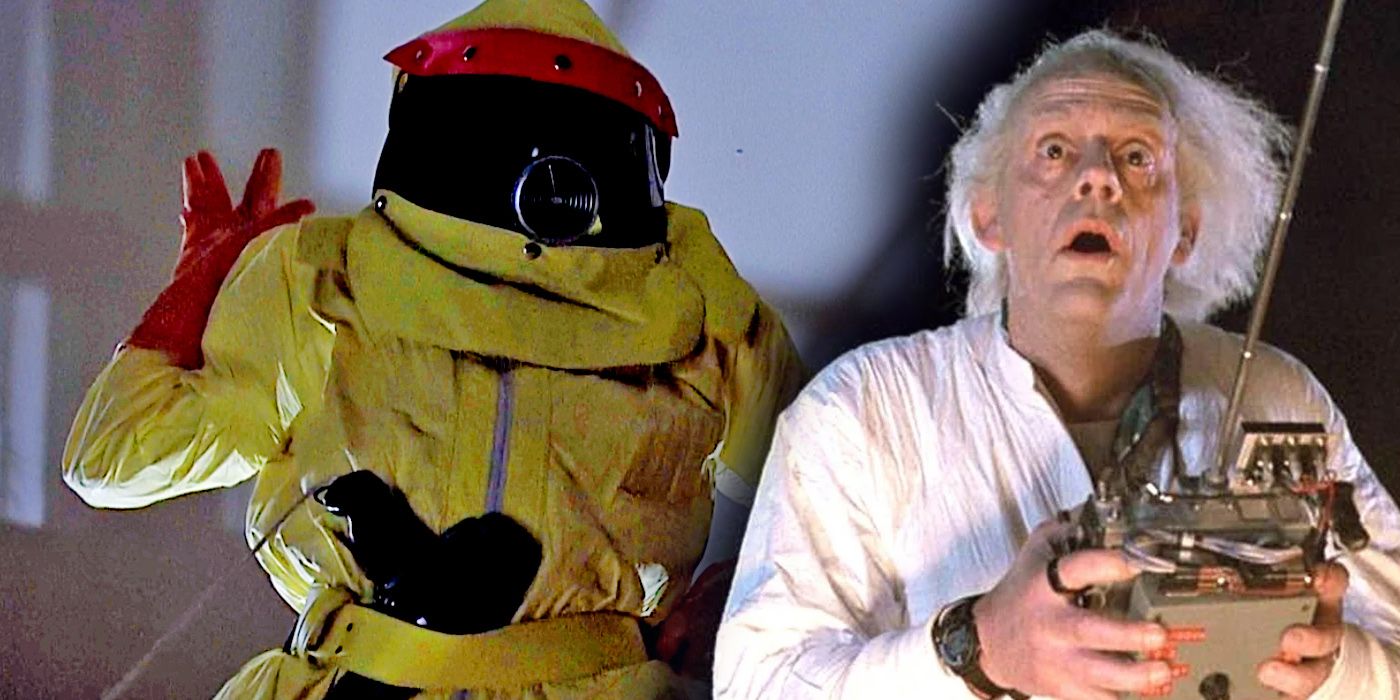
The paradoxical implications of Back to the Future's time travel logic are infamous. The film suggests that the past is a place, and that it can be visited if the right vehicle was developed. The film also suggests that there is but one timeline, not branching or parallel timelines, so consequences of altering past events reveal themselves in the present or future. But the film then suggests that Marty's memories of his lived past aren't altered, as he is surprised by how his parents have changed. Following New Marty through the chain of events creates an infinite loop, so how do we make sense of the movie's time travel logic?
Back to the Future may not be paradox-free, but why should that hinder the enjoyment of this classic? If an infinite "New Marty" time loop got in the way of an eminently entertaining story, perhaps the movie wouldn't be the success it is today. But it is, so naturally, it didn't. Director Robert Zemeckis and writer Bob Gale hoped audiences wouldn't feel compelled to pick apart their hair-brained adventure until it fell to pieces, and unfortunately for them, keen-eyed fans know no limit to over-analyzing. Nevertheless, Back to the Future remains an exemplar of the genre.

Genshin Impact has finally confirmed that Hu Tao will be the next character to come out for the game with the release of a new trailer. Rumors and leaks surrounding Hu Tao have been circulating for the last month or so, ever since the launch of Genshin Impact’s currently running 1.3 update, which also introduced Xiao and the Lantern Rite Festival, among other things.
When the 1.3 update of Genshin Impact was announced and released, developer MiHoYo had only unveiled Xiao as the singular character to be released for the update. This was pretty unusual as the game’s previous updates introduced at least two characters, such as update 1.2’s Albedo and Ganyu. Because of this, fans held on to hope that at least one other character would be announced and released before the end of the 1.3 update, a hope which was eventually confirmed by the developer.
MiHoYo published a new trailer confirming the release of Hu Tao that gives fans a preview of the character’s background, voice, and personality. According to the official website, Hu Tao is the 77th Director of the Wangsheng Funeral Parlor which technically makes her Zhongli’s boss, in spite of him supposedly being Rex Lapis and the former Geo Archon. She is a Pyro element character that uses a polearm as her weapon of choice, making her the second character in a row to be released that utilizes the weapon type. Her trailer also shows off her remarkably jolly and playful personality, which falls in sharp contrast with her position as the head of a funeral parlor.
The official website also reveals some of Hu Tao’s talents, the animations of which were leaked quite recently. Her charged attack sees her lunge forward with her spear in similar fashion to Xiangling, another of the game’s polearm users. Her elemental skill and burst are what make her one of the game’s most unique characters. The former involves consuming a bit of her health to increase her damage while the latter damages enemies in a large area around her while restoring her hit points at the same time, so making use of both in tandem is important to keeping Hu Tao's damage output up while staying healthy.
Hu Tao is definitely one of the game’s most quirky characters so far and those who have been eagerly waiting for her to be confirmed as the last character release of Genshin Impact’s 1.3 update can finally rest easy. Now fans of Hu Tao only need to wait a few more days to attempt to obtain the new Pyro polearm user when she’s released after the current Keqing banner ends next week.
Source: MiHoYo

Dragon Ball Super introduces a host of new characters and concepts that contradict the widely-criticized Dragon Ball GT series. Akira Toriyama's famous Dragon Ball story follows Goku from his early childhood living alone in the forest to adulthood - not that you'd necessarily notice from his eternally youthful looks and immature personality. When the Dragon Ball Z anime finished adapting Toriyama's manga material in 1996, Goku's popularity was still surging across the world, as western networks began picking up the property and getting an entire generation hooked on anime for life. Reluctant to let the Dragon Ball franchise end, Toei Animation produced a sequel series under the title Dragon Ball GT.
Despite still following Goku and his friends, Dragon Ball GT told a totally new story not derived from Toriyama's manga, and the fan reaction was predictably negative. Dragon Ball viewers were generally disappointed with the futuristic tone, sweeping changes to the mythology, and lack of substance. Dragon Ball laid dormant for a while after GT's conclusion, but maintained its popularity, and a new sequel series, Dragon Ball Super, premiered in 2015.
Made with Toriyama's involvement this time, Dragon Ball Super has enjoyed far more acclaim. In terms of the timeline, however, Dragon Ball Super takes place before the era of GT, meaning both could technically still exist within the same canon. Even though Dragon Ball GT hasn't completely been overwritten, so much of Dragon Ball Super retcons the previous sequel. Here's every way the latest Dragon Ball anime series delivers a canon Kamehameha to Dragon Ball GT.

Perhaps the most obvious retcon Dragon Ball Super makes to Dragon Ball GT is in the power levels of Goku and Vegeta. In Dragon Ball GT, both Saiyans unlock the Super Saiyan 4 transformation - an ape-like form with black hair, red fur and a restored tail, which remains Goku and Vegeta's strongest state until the end of the anime. In Dragon Ball Super, Goku and Vegeta ascend to Super Saiyan God mode instead, before training themselves up to Super Saiyan Blue. Goku goes a step further by honing the Ultra Instinct technique, while Vegeta learns Forced Spirit Fission. According to the Dragon Ball timeline, Goku and Vegeta should have these God-like techniques available in GT, but not one of them is even mentioned.
Other characters such as Gohan and Krillin also receive power-ups in Dragon Ball Super, but they might've neglected their training and got rusty before Dragon Ball GT, which would explain the discrepancy. Since Goku and Vegeta are constantly training, however, there's no reason for them to stop using Super Saiyan God and Ultra Instinct.

Ever since Universe 7's God of Destruction, Beerus, was alerted to the prophecy of a Super Saiyan God by his pet fish, he and Whis have been a constant presence in the Dragon Ball story. Whether they're consuming Earth's delicacies or complaining about how troublesome Saiyans are, Beerus and his angelic assistant can't help but hang out with Goku's Z-Warriors. As Dragon Ball Super progresses, Beerus and Whis become even more involved, training Goku and Vegeta personally, and even rewinding time when Frieza threatens to destroy the Earth.
It's strange, then, that the characters are completely absent throughout Dragon Ball GT, not even mentioned by the characters on Earth. Obviously, this is because Beerus and Whis weren't created when Dragon Ball GT was airing, but from an in-story perspective, it's a plot hole.
The same can be said of other divine beings introduced in Dragon Ball Super. Goku made a firm friend in Zen-Oh, and there's an entire roster of Gods and angels who are integral to the fabric of the universe. Then there are the concepts of God energy, time rings, etc., all of which are ignored completely in the futuristic timeline of Dragon Ball GT.

Dragon Ball Super massively expands Akira Toriyama's fictional world by revealing the existence of other universes beyond Goku's Universe 7. There are twelve in total, and each has a parallel twin containing similar planets and races. The Z-Warriors compete in inter-universe tournaments in Dragon Ball Super, and befriend the likes of Hit and Jiren, as well as the Saiyans of Universe 6. Vegeta even finds a protege in young Cabba, instructing the warrior how to become Super Saiyans.
No one in Dragon Ball GT references that these other universes exist, nor any of the allies or enemies made during the Tournament of Power. Not only is this strange, but Goku uses Jiren as a measuring stick for his own power after their intense battle, always hoping for a rematch in a future tournament. Why wouldn't he still feel the same during Dragon Ball GT?

Dragon Ball Super introduces the Super Dragon Balls. According to legend, these planet-sized orbs were the original wish-making balls, and the Namekians crafted their own smaller sets from them. Because the Super Dragon Balls are so difficult to obtain, it makes sense that the Earthlings wouldn't necessarily bother collecting them, but the existence of Super Dragon Balls does contradict Dragon Ball GT's Shenron arc.
This storyline reveals that every wish made using the Dragon Balls created an evil Shenron inside each sphere, and Goku must defeat all seven to protect the Earth. But if the Dragon Balls are merely chips off the much larger Super Dragon Balls, why do these powerful Shadow Dragons exist? And could the Super Dragon Balls have their own, stronger versions? Moreover, each dragon corresponds to a wish made during Dragon Ball or Dragon Ball Z... but there are none relating to wishes from Dragon Ball Super.

Dragon Ball Super makes two major additions to the Z-Fighters. The first is Jaco, an alien and Galactic Patrolman who met Bulma as a child. As Goku's adventures become more planetary in nature, Jaco begins joining the team for their biggest fights, since Earth is under his jurisdiction. He might not be especially useful, nor full of courage, but Jaco is a reassuringly comedic presence nonetheless. Dragon Ball Super also reintroduces Android 17 to the main group. The black-haired warrior went into hiding in Dragon Ball Z, and reemerged in GT after being taken over and transformed into a villain. In Dragon Ball Super, Android 17 agrees to join Universe 7's team in the Tournament of Power, and then continues to fight alongside them against later villains such as Moro. Dragon Ball GT contradicts both characters; Jaco doesn't appear at all, and Android 17 is living alone again. There's also no mention of 17's family, who are referenced in Dragon Ball Super.

The original Dragon Ball story sees Goku defeat Frieza, and Future Trunks finishes the villain off with a swift swing of his blade. When the gates of Hell open in Dragon Ball GT, Frieza makes a temporary return to Earth before being sent back from whence he came. But while Frieza is very much dead throughout Dragon Ball GT, he's very much alive in Dragon Ball Super. Frieza's henchmen manage to revive him in the Resurrection F arc, but despite attaining a shiny new form, the villain is once again killed by Goku. After helping Universe 7 to victory in the Tournament of Power, Goku allows Frieza to be revived permanently, and the character is currently still kicking around. It's possible that Frieza could die again between Dragon Ball Super and Dragon Ball GT, but as things stand, the character's status in one sequel is incompatible with the other.

When Dragon Ball GT begins, an older Emperor Pilaf (accompanied by Mai and Shu) uses the Black Star Dragon Balls to turn Goku into a child again. At the start of Dragon Ball Super, however, the Pilaf Gang inadvertently turn themselves into children. With only a few years between the two sequels, Pilaf and his cronies should still be relatively youthful when they wish upon the Black Star Dragon Balls in GT. Instead, Pilaf is visibly wrinkled, and the other two are fully-grown. The only possible explanation is that Pilaf uses the Dragon Balls to wish him and his pals back to their natural ages during the interim between Super and GT.

As the granddaughter of Goku and the daughter of Gohan, Pan is a formidable fighter in Dragon Ball GT, but she never turns Super Saiyan, and her strength still pales in comparison to that of her family members. Although she's merely a baby in Dragon Ball Super, the anime hints that Pan has even more latent potential than Gohan as a child. After being caught up in one of Pilaf's escapades, Pan flies up into space and saves the gang by easily lifting their spaceship. Although this happens in a Dragon Ball Super filler arc, Pan is clearly being built as a more powerful warrior than she eventually becomes in Dragon Ball GT. Like father, like daughter, perhaps?

Dragon Ball GT sees Goku achieve the Super Saiyan 4 transformation by regrowing his tail and staring at the reflected light of Earth to transform into an ape. Vegeta takes a different route, using a machine built by Bulma to bombard himself with "Blutz waves" and transform into a Great Ape. Even at the time, fans argued that Vegeta would never increase his power using artificial methods, as doing so would be an insult to his Saiyan pride.
Dragon Ball Super makes Vegeta's SSJ4 transformation look even more out of character. After witnessing Goku achieve Super Saiyan God by joining hands with others, Vegeta can't stand the thought of doing the same, and he refuses to learn Ultra Instinct and Instant Transmission because those moves don't suit his arrogant personality. Since Vegeta's biggest area of character development in Dragon Ball Super is his resolve to rely on his own strength, it seems ridiculous that he'd later power-up using a machine in Dragon Ball GT.
